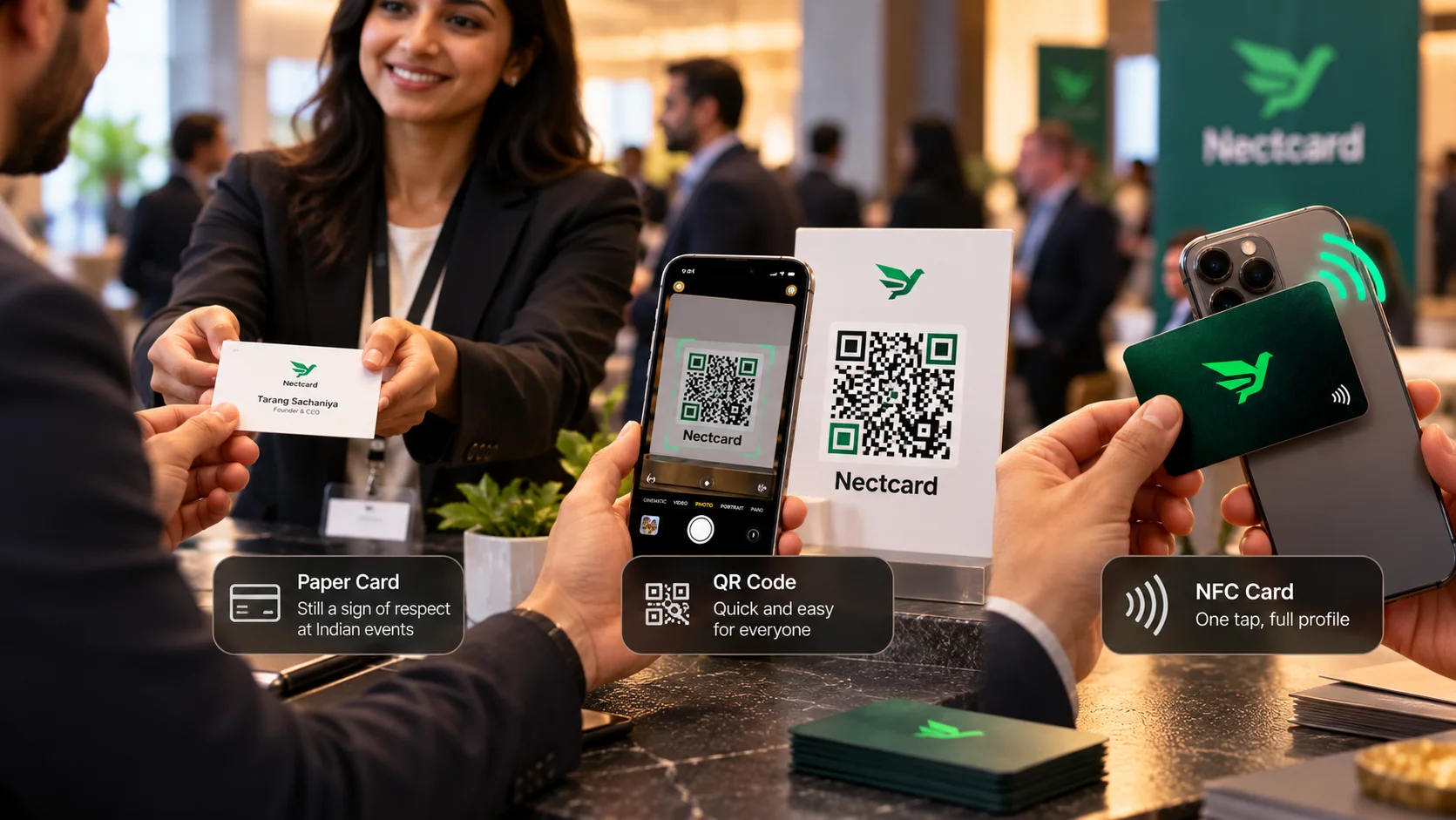
In India, exchanging visiting cards is still a sign of respect, especially with senior people, so the gesture matters as much as the format. Offer your card once there is some rapport, greet the most senior person first, look at any card you receive before putting it away, and use whatever method the other person is comfortable with: paper, QR or a phone tap.
Why the card moment still matters in India
Contact sharing at Indian events has moved towards QR codes, NFC cards and LinkedIn scans. Even so, a 2025 report from an HR technology conference in India noted that a card is still seen as a mark of respect with senior leaders, and that a card offered with both hands still sends that message. If you switch to digital, keep the courtesy.
Basic card etiquette that still applies
- Greet the most senior person first, then the others.
- Receive cards with the right hand, and consider offering yours with both hands to someone senior.
- When you receive a card, read it for a moment before putting it away. Don't stuff it straight into a pocket.
- In formal meetings cards are often exchanged at the start. At networking events, share yours once you have actually talked, usually towards the end.
The same applies to digital cards. If you start a conversation by holding out a QR code, it comes across as transactional. Offer it once you've built some rapport, with a simple line such as "Let me share my details" or "Scan this and I'll save yours too."
Paper, QR or tap: match the other person
There's no single right format. Pick the one that suits the person and the setting. If someone hands you a paper card, it's polite to respond in kind or offer to share your details on their phone. If the lighting is poor or the Wi-Fi is weak, a paper card avoids the fumbling. Phone-to-phone features such as NameDrop are quick between iPhones but don't work across all phones.
| Situation | What usually works |
|---|---|
| Senior leader, formal meeting | Offer a card with both hands; let them choose how to save it |
| Peer at a startup or tech meetup | Tap or QR, then a quick WhatsApp or email to swap back |
| Dim hall or no signal | Paper card, or take their number and send your link later |
| Crowded expo booth | A QR on the table or banner so many people can scan at once |
| They have an older phone | QR with the camera, or send your link by SMS or WhatsApp |
For a side-by-side look at the two digital options, see NFC vs QR business cards.
How to offer a tap without the awkward fumble
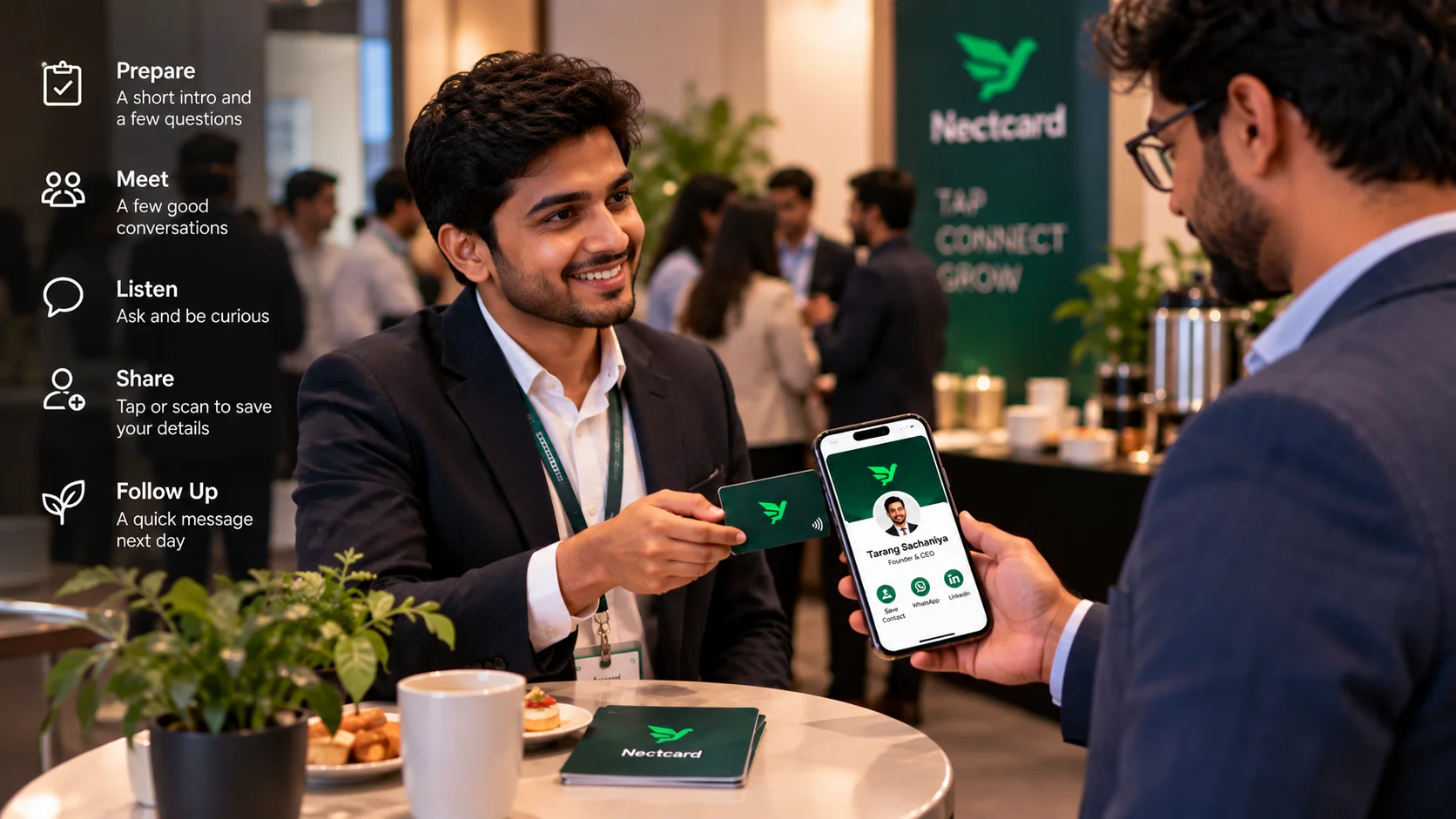
- Say what will happen: "Just tap your phone here and my contact will open."
- Hold the card steady against the back of their phone and move it slowly; the reading spot differs between models.
- If nothing opens in a couple of seconds, turn the card over and let them scan the QR code with the camera.
- Once your profile opens, point to the save-contact button so your number is saved under your name.
- Ask for theirs: "Could you send me a hi on WhatsApp so I have your number?"
Every Nectcard carries a QR code as a backup for phones that don't tap, and the profile opens in the browser, so no one has to install an app in the middle of a conversation. If people often ask whether their phone will work, see whether NFC cards work on iPhone and Android.
Should you still carry paper cards?
Having a few on hand is sensible if you meet senior or traditional contacts. Printed details go out of date, though, and a physical card can't be updated once you've handed it over. One middle path is a single NFC card with a digital profile behind it, so you have something physical to show and details you can still update. The digital vs paper visiting card guide compares costs over three years.
In short
In India, how you offer your card counts as much as the format. Build rapport first, respect seniority, match the other person's method and always have a fallback. That way a tap feels as courteous as a card offered with both hands.
One card, tap or scan
Plastic, wooden and metal cards with the same tap and QR features. Ships free across India.