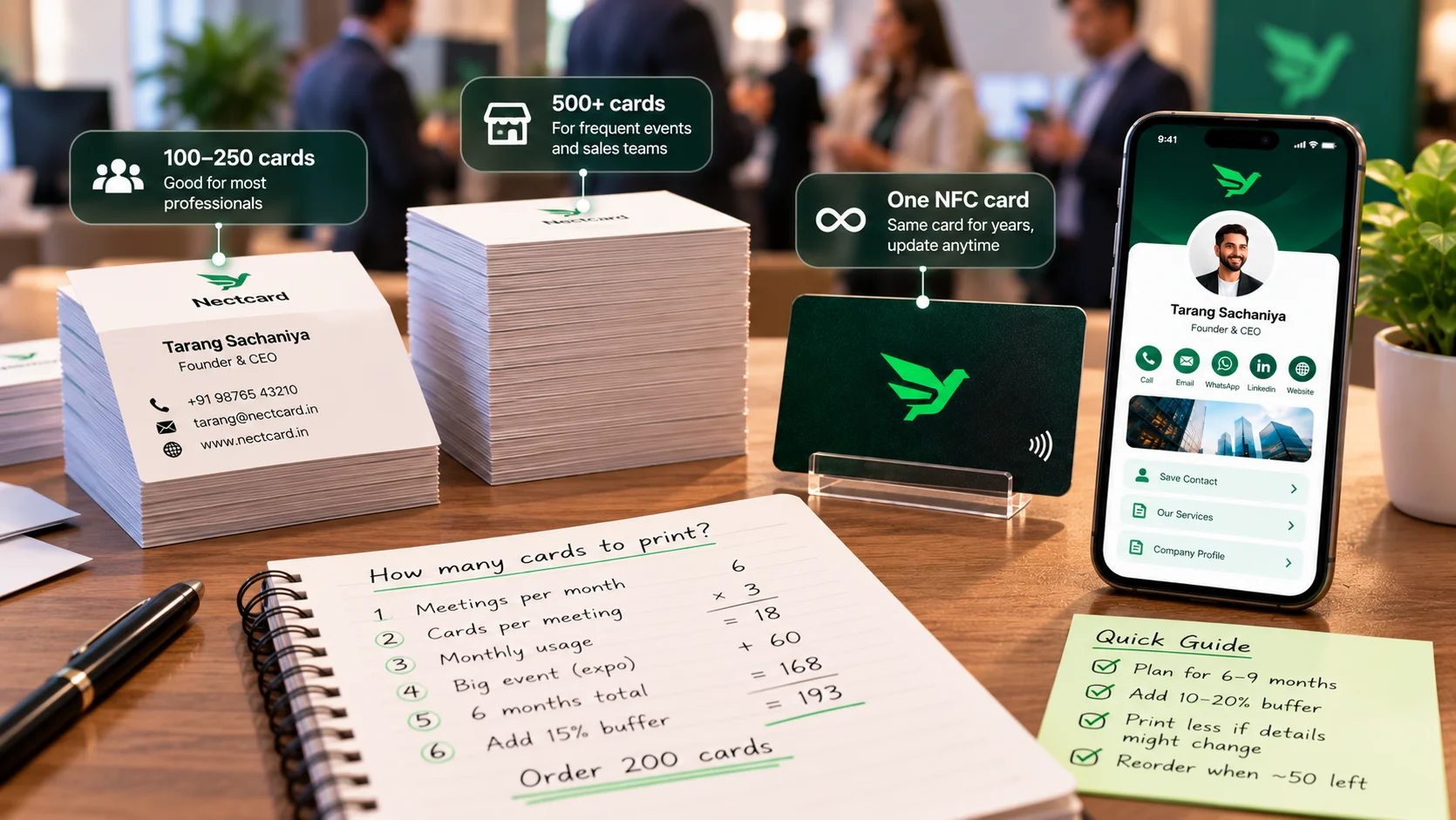
Print enough visiting cards for about six to nine months of real use, not a year or more. Count how many you hand out in a normal month, add your known events, and add a small buffer. If your number, title or address might change soon, print fewer. For a lot of people in India that means a first order of 100 to 250 cards, not 1,000.
Why the big box is usually a mistake
We've all seen it. A box of 1,000 cards sits in the office drawer, and three months later the phone number on them is wrong. You cross it out with a pen, or you throw the box away. Printers will happily sell you more because the price per card drops, but as 4over4 puts it, the cost that matters is per card actually handed out, not per card printed.
Indian printers such as Printo say most of their visiting cards start at a minimum of 100, so you can't go much smaller than that anyway. That's fine. A smaller run that you finish is cheaper in practice than a big run you bin.
Work it out in five steps
Digital card companies like Popl and Mobilo publish a similar method. Here's a simple version you can do on the back of an envelope:
- Look back, not forward. Count the in-person meetings, client visits and events you had in the last three months. Mobilo suggests this because people tend to plan for the networking they hope to do, not what they actually do.
- Estimate cards per month. Multiply the meetings or events in a typical month by the cards you hand out at each.
- Add the big events. A trade show or a multi-day expo can use many more cards than a normal week, so add those separately.
- Add a buffer. Popl suggests around 10 to 20 percent extra for unplanned meetings.
- Cut it to six to nine months. If the total is a year's worth or more, order half now and the rest later.
How many cards for your kind of work?
These ranges come from 4over4, a printing company, and they're a starting point rather than a rule. Your own count from the steps above is more reliable.
| Your situation | Suggested order | Roughly lasts |
|---|---|---|
| Frequent networker (sales, events every week) | 500 to 1,000 | 6 to 12 months |
| Small business owner | 250 to 500 | 3 to 6 months |
| Freelancer or solopreneur | 100 to 250 | 6 to 12 months |
| First order or new design | About 250 | Use it to test the design |
Mobilo's examples show how wide the spread is. A real estate agent doing weekend open houses might go through more than 1,000 cards a year, while a freelancer who gets work online may need very few.
When to reorder
- Set a trigger. 4over4 suggests reordering when you're down to about 50 cards, so you don't run out while the new batch is being printed. Popl suggests 20 to 30.
- Reorder after any change: a new phone number, title, address, logo or website.
- Check your stock every three months, especially before a big expo or wedding season, when you meet more people.
- Keep your print-ready design file handy so reordering takes minutes, not a week of back and forth with the designer.
Common mistakes
- Ordering for the networking you plan to do, not what you actually did last quarter.
- Choosing 1,000 cards because the per-card price looks good, then throwing half away.
- Forgetting that cards also get used as appointment slips or left at the counter, which empties the box faster.
- Printing a WhatsApp or office number that you already know is about to change.
How this works in different industries
- Real estate: you may hand out cards at every site visit and weekend open house, so you'll go through stock fastest. Reorder on a trigger, not a date.
- Sales teams: work out the count per person and order per rep, so one person leaving or changing territory doesn't waste a shared box.
- Doctors and clinics: cards are often used as appointment reminders at the front desk, so they run out faster than you'd guess. Count those separately.
- Restaurants and retail: cards left at the billing counter disappear quickly, and timings or delivery numbers change. Keep runs small.
- Freelancers and consultants: if most work comes from referrals and online, a small run of 100 is often plenty.
When one NFC card makes more sense than a box
If your count keeps coming out high, or your details keep changing, it may be worth asking a different question. An NFC card is one card you keep and tap, and the profile behind it can be edited as often as you like without reprinting. Mobilo suggests that if you have fewer than five in-person meetings in three months, a digital card may suit you better than printing at all.
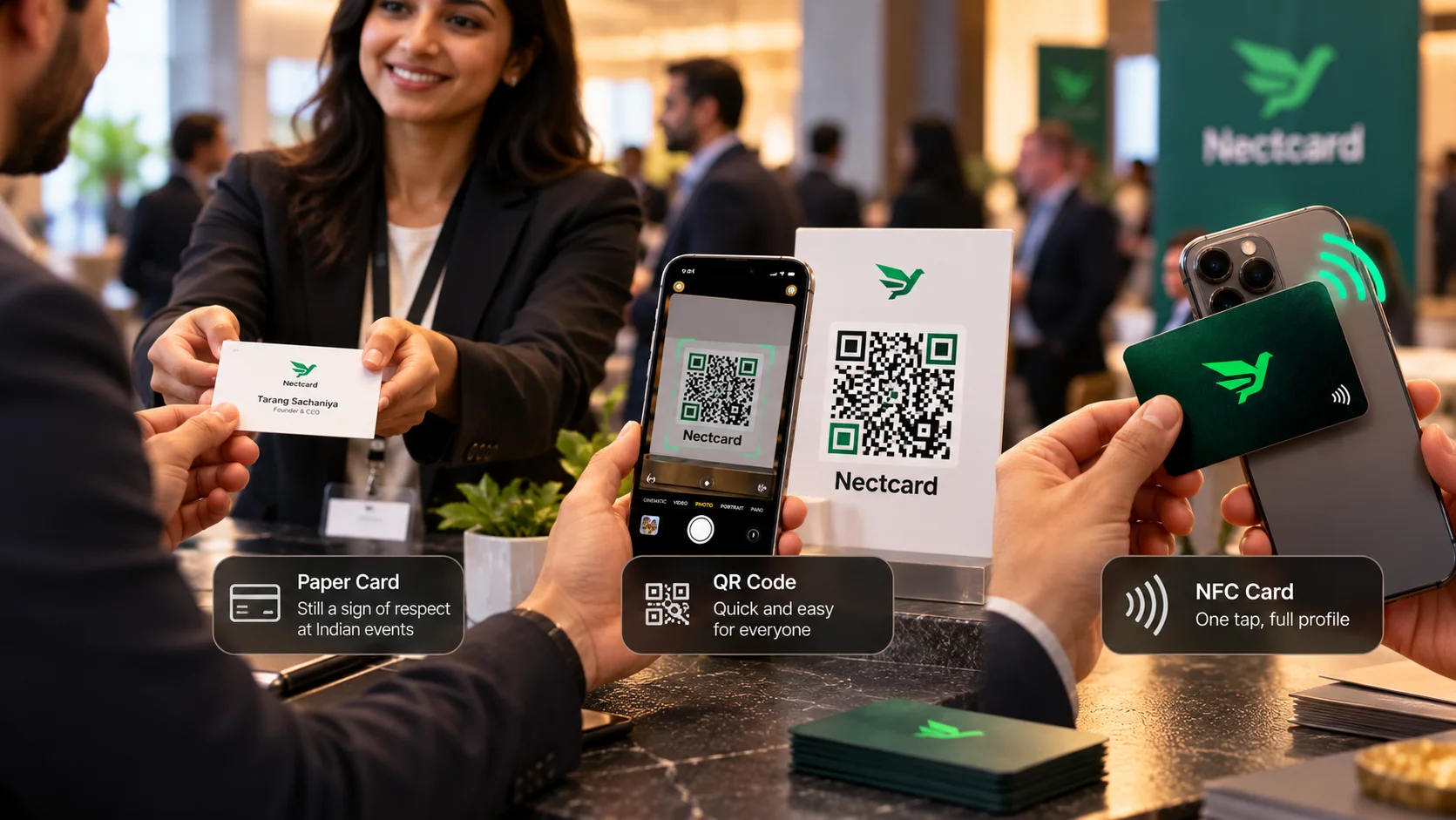
It isn't a perfect swap. Some people you meet won't have NFC on, which is why a QR backup on the card matters, and a few contacts may still prefer a paper card in hand. Some people keep a small paper run for that and use an NFC card for everything else. If you're weighing it up, our digital vs paper visiting card guide compares the cost over three years. For teams, see NFC cards for companies.
Nectcard cards are paid once per one-, two- or three-year plan with no monthly fee, every card has a QR backup, and edits are unlimited, so a change of number doesn't mean a new box.
The short version
Count what you really hand out, plan for six to nine months, add a little extra, and print less when change is coming. The right number is the one you finish before the details go out of date.
Tired of reprinting?
One NFC card with a QR backup, and a profile you can edit any time.