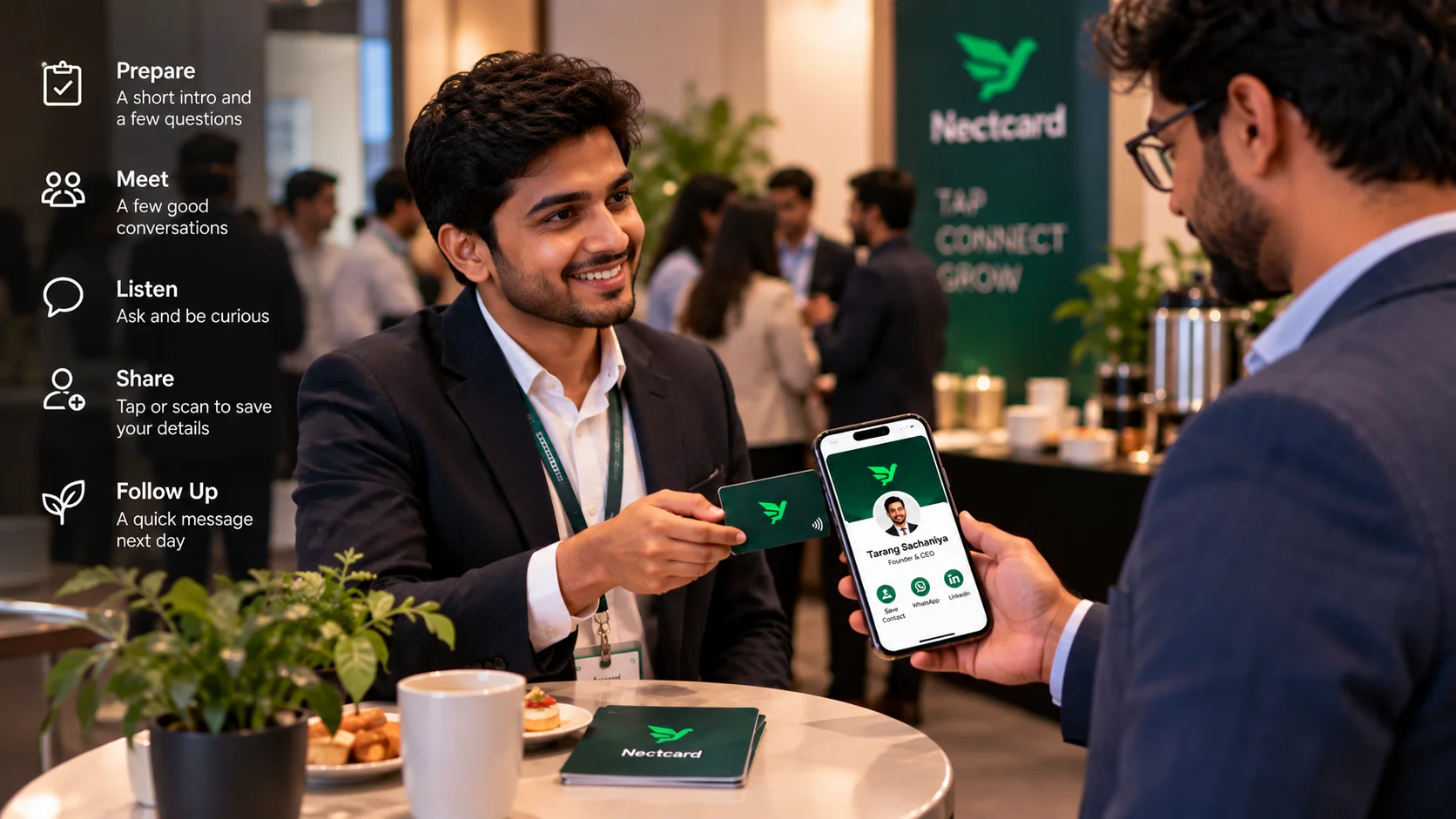
To network as an introvert, stop trying to meet everyone. Prepare a one-line introduction and two or three questions, arrive early, aim for a few real one-on-one conversations, leave when your energy drops, and follow up the next day. Quality beats a pocket full of cards.
You walk into the hall at a chamber of commerce meet or a startup mixer. Everyone seems to know everyone. Groups are laughing near the chai counter and you're pretending to check your phone. If that's you, the good news is that the advice from people who run networking groups is quite gentle. Networking is about building relationships with people you share something with, not about working the room.
Before you go: a little prep goes a long way
- Check who's attending or speaking, and pick two or three people you'd like to meet.
- Write a one-sentence introduction (more on this below).
- Prepare two or three open questions you're comfortable asking.
- Set a small goal, such as three good conversations or one hour, and give yourself permission to leave once you reach it.
- If possible, bring a colleague or friend. Walking up to people is easier when you're not alone, as long as you don't spend the whole evening talking only to each other.
Your one-line introduction
"So, what do you do?" is the question that freezes many introverts. Have the answer ready. A simple method is to answer three things: what you do, who you do it for, and what problem you solve for them. Then squeeze it into one sentence. Write a few versions and keep the one that sounds like you when you say it out loud.
- "I'm a CA, and I help small manufacturers in Gujarat keep their GST filings and books in order."
- "I design websites for clinics and small hospitals so patients can book without calling."
- "I'm a final-year engineering student looking for a role in product design."
Tweak it for the room. What you say to a recruiter at a career fair won't be what you say to a fellow founder at a meetup. And remember the job of this line is only to start a conversation, not to sell yourself.
At the event: who to talk to and what to say
Arrive early. The room is quieter and people haven't formed tight circles yet, so starting a chat feels less like breaking into a group. Later, look for the person standing alone near the snacks. They may be just as relieved as you to have someone to talk to, and one-on-one is where introverts tend to do their best.
Then lean on questions. Ask, listen properly, and ask the next thing based on what they said. You end up talking less and remembering more, which helps when you follow up.
- "What brought you here today?"
- "What are you working on these days?"
- "What did you think of the last session?"
- "How did you get into this line of work?"
Pick events that suit you
Not every format is equally tiring. Workshops, seminars and small roundtables give you a shared topic to talk about, which makes conversations feel natural. Large receptions are harder. You don't have to skip them, just plan for them differently.
| Event type | How it usually feels | What to do |
|---|---|---|
| Workshop or seminar | Easier: there's a shared topic | Ask your neighbour about the session during the break |
| Small roundtable or meetup | Easier: fewer people, longer chats | Aim for two or three proper conversations |
| Large expo or trade fair | Busy and noisy | Visit a short list of stalls you picked in advance, take breaks outside |
| Evening reception or party | Hardest: loose groups, lots of small talk | Arrive early, find one person standing alone, leave when you hit your goal |
| Online groups (LinkedIn, community chats) | Low pressure | Comment thoughtfully on posts before you meet people offline |
How to leave a conversation (and the event)
Exiting is a skill too. A simple "It was really nice talking to you. I'll message you tomorrow about that article" works, because it's true and it sets up the follow-up. Take short breaks when you need them: step out for some air, refill your chai, sit for five minutes. When your energy is gone, go home. One good conversation is a successful evening.
The follow-up is where introverts shine
Here's the part you'll probably enjoy. Writing a thoughtful message is easier than small talk, and it's where real connections are built. Within a day, send a short, specific note that mentions what you talked about and suggests a next step, like a coffee or a call. Do all your follow-ups in one sitting so it doesn't hang over you.
- Add a line of notes against each new contact the same night: where you met and what you discussed.
- Mention one specific thing from the conversation in your message.
- Suggest one clear next step, not three.
- If one-on-one meetings are your strength, use events only for quick hellos and then set up proper meetings later.
Mistakes to avoid
- Comparing yourself with the most outgoing person in the room
- Arriving late, when every group has already closed up
- Collecting as many cards as possible and following up with none
- Staying hours after you're drained, then dreading the next event
- Pretending to be someone you're not; people trust you more when you're yourself
How this works in different industries
- Freelancers and consultants: you don't need to pitch at the event. Ask about the other person's current project, then send a follow-up that offers one useful idea.
- Sales teams: quieter salespeople can split the work at expos. One person greets visitors at the stall while the other handles detailed one-on-one product conversations.
- Doctors and clinics: at medical conferences, a question about a session you both attended is an easy, professional opener, and it avoids awkward talk about patients or fees.
- Real estate: property expos are loud. Pick a quieter time of day if you can, and let a card with your gallery and WhatsApp do some of the explaining after the visitor leaves.
- Creators and coaches: engaging with people online before an event means you walk in already knowing a few faces.
Wrapping up
Introverts don't need a new personality to network well. You need a plan that fits you: prep a little, talk to fewer people properly, leave on time, and follow up well. If you want the contact swap to be quick, see how NFC business cards work and what to put on a digital business card.
Share your details in one tap
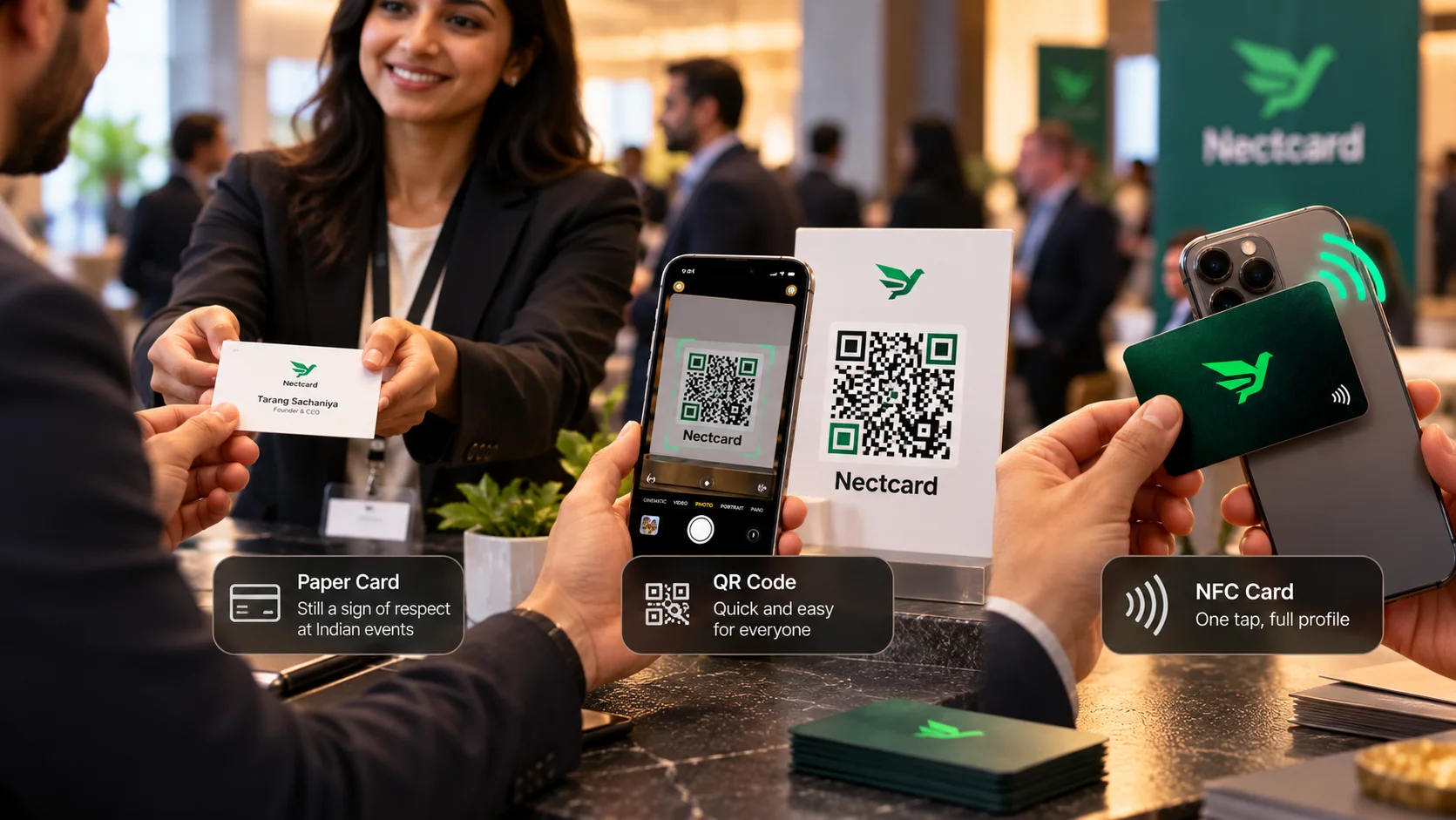
A Nectcard opens your profile in the other person's browser with a Save contact button, and every card has a QR backup.