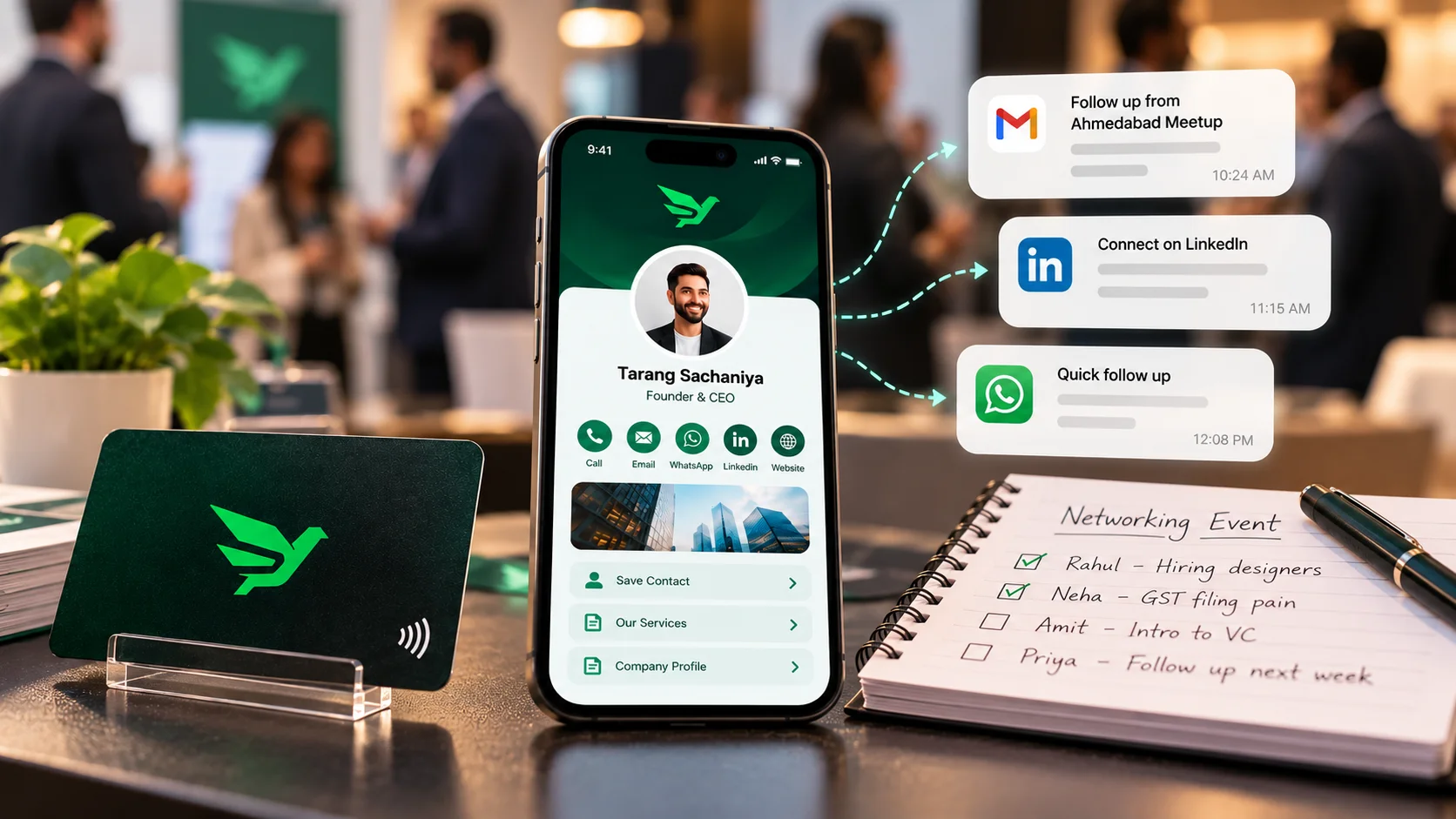
Send a short, personal message within 24 to 48 hours. Mention the event and one thing you actually talked about, say thanks, and ask for one small next step. That's all a good follow-up needs. The hard part comes earlier: remembering who said what. So before you write to anyone, write a quick note about each conversation.
Before you leave: write down what you talked about
Most of us have done this. You come home from a meetup with a pocket full of cards and a phone full of new contacts, and by Monday you can't remember which Rahul was the one hiring designers. Career coaches and networking guides give the same fix: make a quick note of what you discussed, anything you have in common, and anything you promised to send. If you're rushing to the next session, a ten-second voice note is fine.
- Where you met ("startup meetup, after the fintech panel")
- One detail only the two of you would know
- What you offered or agreed to ("send the vendor list", "intro to my CA")
- How warm it felt: hot, warm, or just a nice chat
Keep the note with the contact, not on the back of a paper card that ends up in a drawer. And if someone saves your details from your digital visiting card, ask them to drop you a quick "hi" on WhatsApp or email right then. Now you have their details too.
When to send it
Send it the same day or the next. Most guides say within 24 hours, 48 at most. If someone asked you about pricing or a demo, reply that evening. The longer you wait, the less interested you seem, and the harder it is for them to remember you.
What to write
Keep it short and specific. A message that works usually has four parts:
- The event, in the subject line or the first sentence, so they can place you.
- One real detail from your conversation. "Great to meet you at the event" could have gone to anyone.
- Something useful: the article you mentioned, an introduction, or whatever you promised.
- One small ask, like a 15-minute call next week. Not a vague "Thoughts?"
Make sure it reads easily on a phone. Sign off with your name, role, company, number and links. If you're not sure what your profile should show, here's what to put on a digital business card.
Here's one that works
It's short and specific, and it's easy to say yes to.
Email, LinkedIn or WhatsApp?
It depends on how well you got on. In Indian business, email is still the safe, formal choice, and calling someone out of the blue can feel pushy. WhatsApp is great once there's some rapport and they've already messaged you there. Keep it brief, though, and don't send big files nobody asked for.
| Channel | Use it when | Avoid |
|---|---|---|
| It's your first follow-up, or they're senior or formal | Generic subject lines and long paragraphs | |
| You want to stay on their radar over time | Connection requests with no note | |
| You've already chatted there, or they asked you to message | Forwards, voice notes to near-strangers, heavy attachments | |
| Phone call | They asked you to call | Calling unannounced |
LinkedIn advice varies. Some career advisers say to wait until after a good follow-up call before you connect, because people accept more readily once you've spoken. Others say to connect within a day or two with a short note. Either works, as long as you say where you met.
How many times should you follow up?
Not many. Send one good message. If you don't hear back, send one short check-in a week or two later, and add something new rather than "just checking in". Then let it go. Silence doesn't always mean no; people get busy. But messaging someone on email, phone and LinkedIn in the same week won't help.
| When | What to do |
|---|---|
| That evening | Write a quick note on each starred contact |
| Within 24–48 hours | Send your first message with one small ask |
| Day 2–3 | Send a LinkedIn request with a note, if it suits the person |
| About a week later | Send one check-in that adds something new |
| Two weeks | Close the loop politely and stop |
How it looks in different jobs
The basics stay the same, but what counts as useful changes with your work.
- Sales teams at expos and trade fairs: tag leads at the booth and reply the same day to anyone who asked about pricing or a demo. See NFC cards for sales teams.
- Real estate agents: after a site visit or property expo, send the one listing the buyer liked, not your whole inventory. See NFC cards for real estate.
- Freelancers and consultants: share one relevant work sample, or a few lines on how you'd tackle their problem. See NFC cards for freelancers and consultants.
- Coaches and creators: send the free resource or video you mentioned, then suggest a short call. See NFC cards for creators and coaches.
Make yourself easy to remember
Follow-ups work better when the other person already has your name saved. If your card adds you to their contacts in one tap, your WhatsApp message turns up under your name instead of as an unknown number. Here's how to share an NFC business card on iPhone and Android.
The short version
Take notes before you leave. Pick the few people who matter. Send each of them one specific, useful message within a day or two, check in once, and then leave it. Doing this every time works better than trying to write the perfect message.
Be easy to save, then easy to follow up
Nectcard profiles open in the browser with a Save contact button, no app needed. Cards ship free across India.