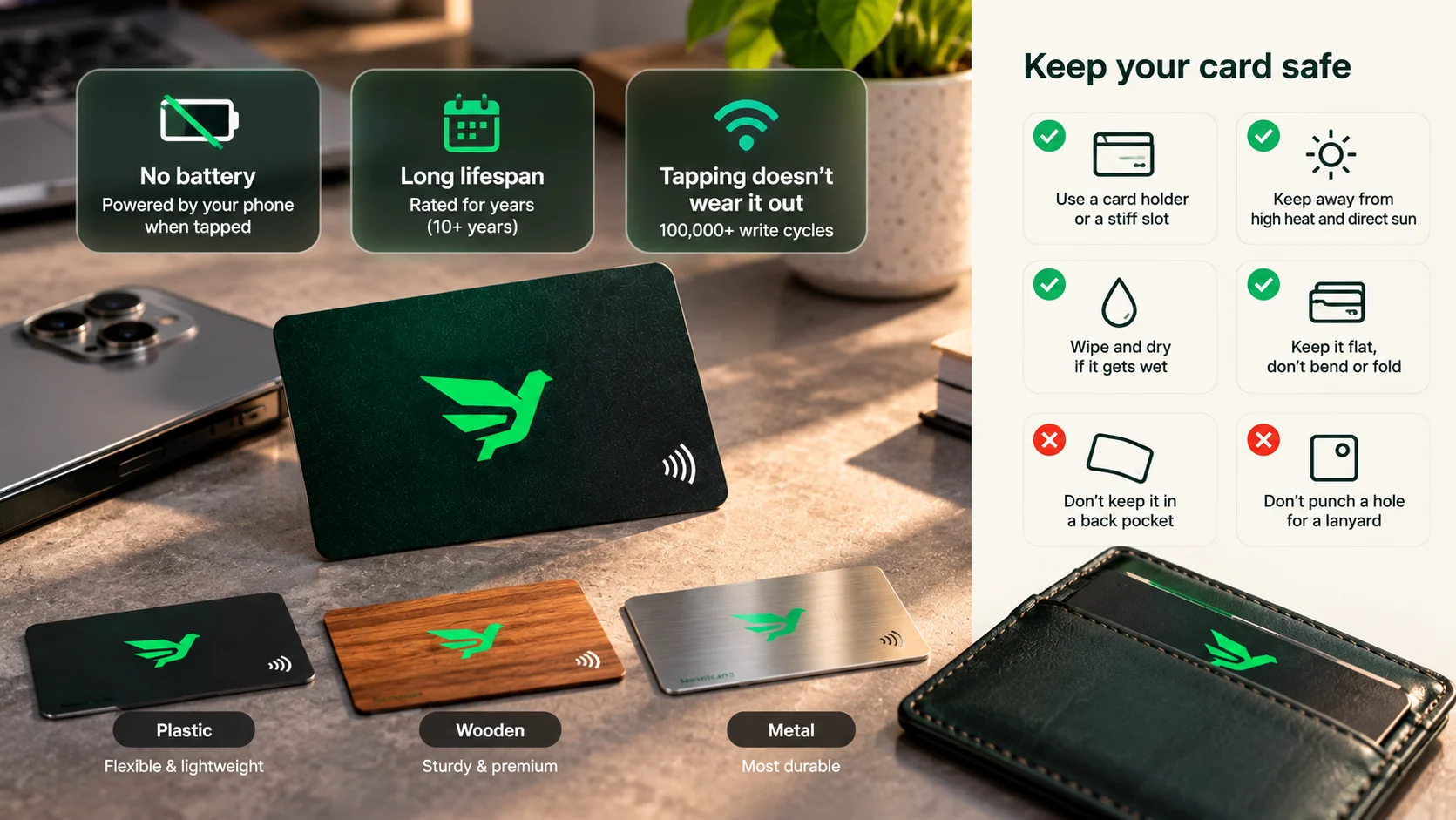
A well-made NFC business card can last for many years. NXP's NTAG213, a chip widely used in NFC tags, is listed with 10 years of data retention and 100,000 write cycles, and the chip doesn't wear out from being tapped. In practice, a card usually stops working because it was bent, cracked, overheated or lost, or because the online profile behind it was switched off.
So the real question isn't "when will the chip die?" It's "what could kill it early, and what happens to the link?" Let's take those one by one.
Why the chip itself lasts so long
An NFC card has no battery. The chip sits idle until a phone comes within a few centimetres, then borrows power from the phone's NFC field just long enough to be read. Nothing inside is charging, draining or spinning, so there's very little to wear out. Blinq's guide makes the same point: the passive chip doesn't wear out from tapping.
What about the 10-year figure? That's a data retention rating: how long the chip is specified to hold what's written on it. It isn't an expiry date. In an RFID Journal Q&A, an industry executive says that in a stable environment an NFC tag can last 20 years or more, and that lifespan depends on the environment it's kept in rather than the memory. Treat both numbers as "years, not months", not as a promise for your particular card.
The 100,000 write cycles matter even less for you. Your card's chip is usually written once, with a link. Every time you change your phone number or photo, you're editing the online profile, not rewriting the chip. For the basics of chip, tap and QR, see how NFC business cards work.
What actually shortens a card's life
Inside the card, a thin wire antenna loops around the edge and connects to a tiny chip. Damage either one, or the joint between them, and the tap stops. RFID Journal and ID-card makers list the usual culprits:
| Risk | What happens | How to avoid it |
|---|---|---|
| Bending | The antenna can separate from the chip | Don't keep the card in a back pocket or a soft wallet you sit on |
| Crushing or impact | The chip itself can crack | Carry it in a card holder or a stiff slot in your bag |
| Punching a hole | A hole in the wrong spot can cut the antenna | Never punch it for a lanyard; use a clip-on holder |
| High heat | Very high heat can melt the solder joint; strong sun or a stove can warp a card's shape | Don't leave it on a car dashboard or near the kitchen |
| Water and moisture | Wet cards can read poorly until dry | Wipe and dry it; most card bodies handle water better than paper |
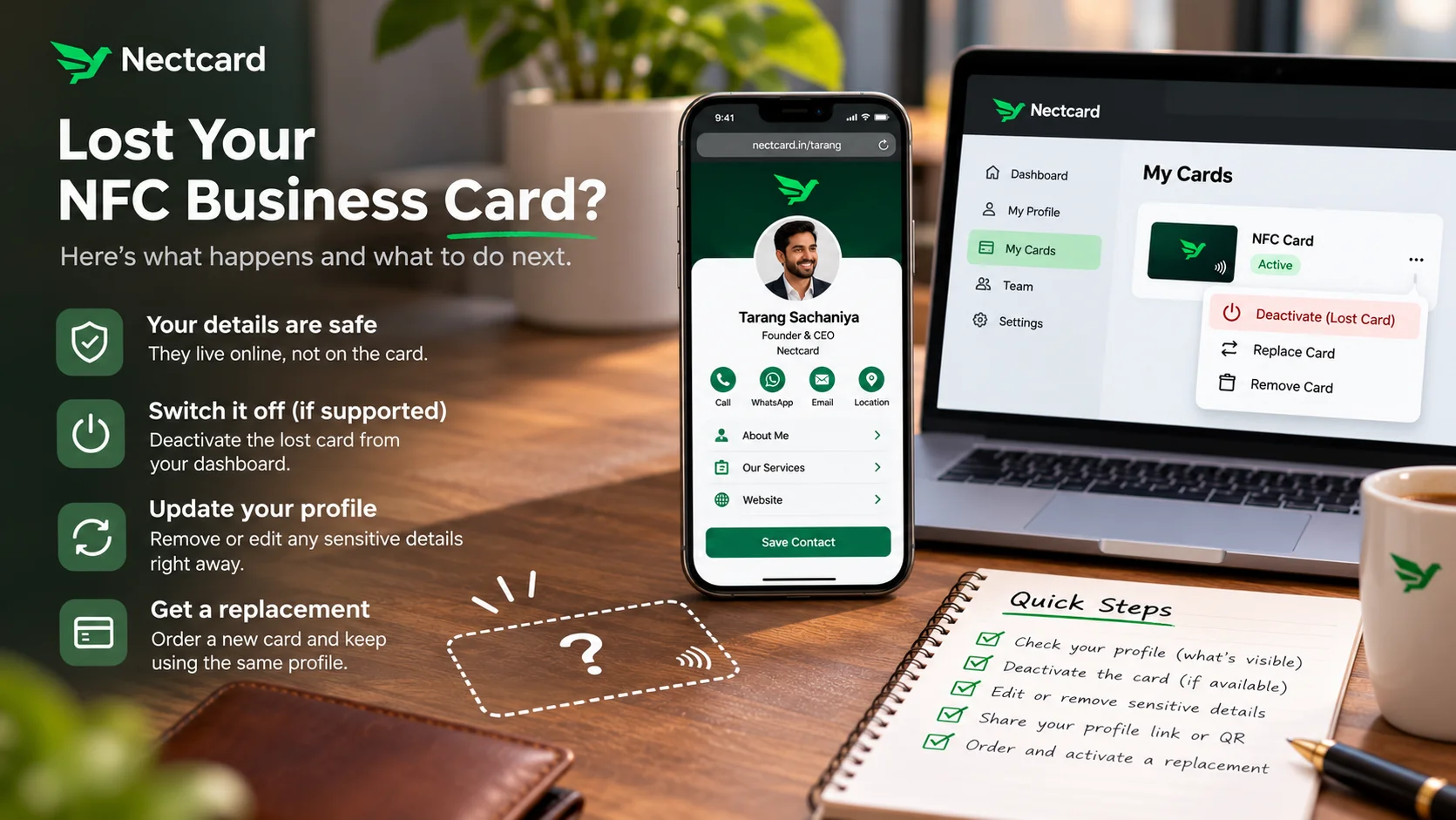
| Loss | No damage, but someone else now holds your card | Keep a spare and know how to update or switch off your profile |
Extreme cold is usually not a problem, according to RFID Journal.
Does the material matter?
Yes, but mostly for the look and the body, not the chip. Plastic (PVC), wooden and metal cards all carry an NFC chip, and on Nectcard the tap and QR work the same on every material. What differs is how the body handles daily life. A PVC card is flexible, so it's the one most likely to bend in a back pocket. Wood is rigid, so it won't flex in a pocket the way PVC can. Metal is the toughest body, and quality metal cards are built so the metal doesn't block the signal. Compare the options in plastic vs wood vs metal.
A simple care checklist
- Keep it flat: a card holder, a stiff wallet slot or your laptop bag's front pocket.
- Keep it out of the back pocket of your trousers.
- Don't punch holes, fold it, or use it to scrape anything.
- Keep it off car dashboards and away from stoves and ovens.
- If it gets wet, wipe it and let it dry before you try a tap.
- Tap it with your own phone every few months to check it still opens the right page.
- Keep one spare card at the office or home.
The part that can "expire": your profile
Here's the bit people miss. The chip may last for years, but it only stores a link. If the online profile behind that link is switched off, the card will still tap and open a page that doesn't show your details.
With Nectcard, a plan covers the physical card and the hosted profile for 1, 2 or 3 years, paid once per plan with no monthly fee. You get a reminder before it ends, and renewing keeps the same card and the same link. Since you can edit the profile as often as you like, a job change or a new number never means reprinting.
Common mistakes
- Assuming a card that won't tap has a "dead" chip. Often it's phone position, a thick case or NFC switched off on the other phone.
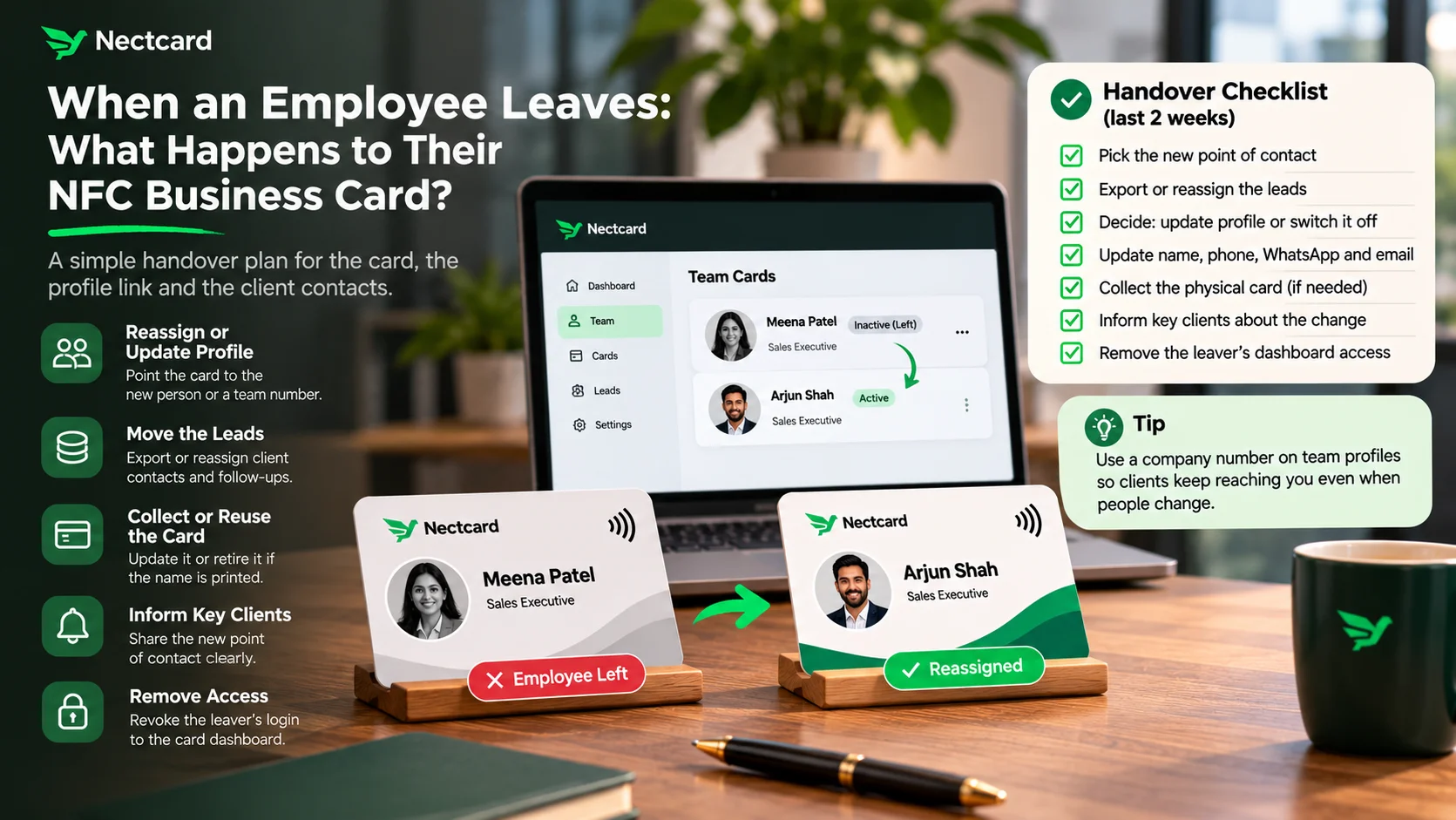
- Throwing the card away after a job change instead of editing the profile
- Laminating or sticking things over the card without testing the tap afterwards
- Letting the plan lapse and forgetting the card in your wallet still points to that page
If a card stops tapping suddenly, scan its QR code first. If the QR opens your page, the card and profile are fine and the issue is the tap itself. Our guide on sharing your NFC card on iPhone and Android covers the right way to hold it.
Who this matters to most
- Real estate: agents spend hours in cars between site visits. Keep cards in a holder in your bag, not on the dashboard where afternoon sun can warp a plastic card.
- Sales teams: field reps pull the card out many times a day. A metal or wooden card in a rigid holder will handle that better than a loose PVC card in a back pocket.
- Restaurants and retail: if your card or tap stand sits on the counter, keep it away from the kitchen pass and wipe spills off quickly.
- Freelancers and consultants: you might carry one card for years across several roles. Update the profile when your services change instead of ordering a new card each time.
So, how long will yours last?
The chip is built for years, and tapping doesn't wear it down. Keep the card flat, cool and with you, check it now and then, and keep the profile renewed. Do that and your card is likely to outlast a few phone numbers.
Pick a card that suits how you carry it
Plastic, wooden or metal, all with the same tap and QR backup.