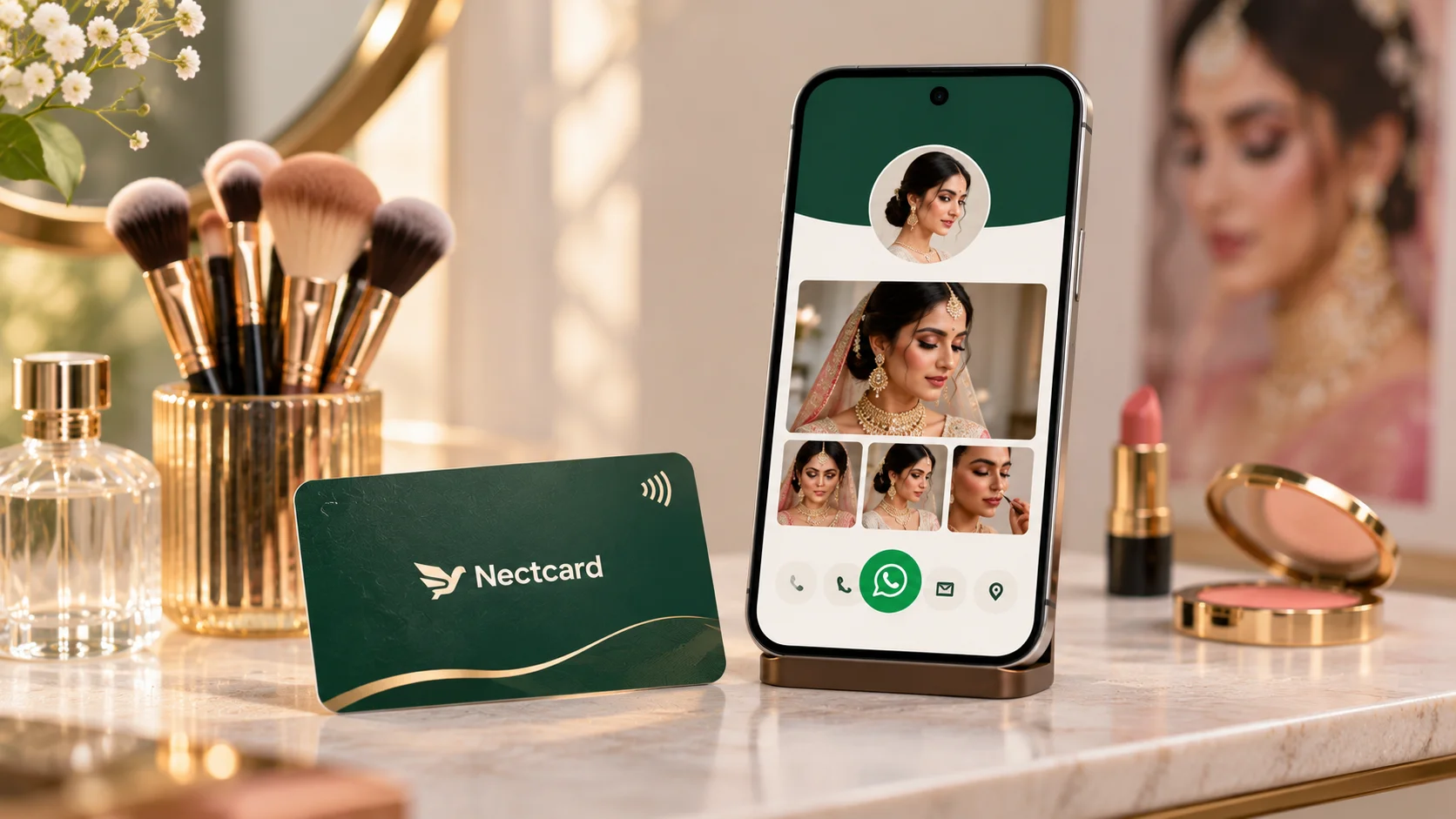
A makeup artist's visiting card has one job: get a bride or her family from "nice card" to looking at your work in a few seconds. A digital card does this better than paper because it can open straight to your portfolio, your packages and a WhatsApp button. Keep the printed side simple and let the profile carry the photos and videos.
Why a paper card isn't enough for makeup work
Think about where your card actually ends up. It goes into a clutch at a sangeet, or a cousin photographs it and sends it on the family group. Nobody can judge your work from a name and a number, so the next step is usually "send me your Instagram". That's one more message before anyone sees a single look you've done.
Makeup artist communities have said the same thing for years: most work comes from word of mouth, from photographers and other wedding vendors, and from cards handed out wherever you work. A digital card fits that habit. It just makes the card itself show your work.
What to put on your profile
- A tight portfolio. Advice from Indian makeup training sites suggests around 15 strong photos rather than a big pile of average ones, with a range of looks such as North Indian and South Indian bridal.
- Photos that show real skin texture, ideally from a proper shoot, not heavy filters.
- Two or three short videos. Short clips of the base, the eyes and the final reveal let a bride see how the makeup sits on skin.
- Your services and packages: bridal, engagement, party, family members, add-ons like hair or draping. Show a starting rate or say "ask for a quote".
- Your booking terms: advance, trial, travel charges for outstation or destination weddings.
- A short line on hygiene, such as disposable applicators and cleaned brushes for every client.
- WhatsApp, Instagram and a one-tap save-contact button.
- Your studio address and hours, if you have a studio.
What each section does for you
| Section | What it saves you | Keep it updated |
|---|---|---|
| Portfolio | Sending photos one by one on WhatsApp | After each wedding season |
| Videos | Explaining your style in words | When your style changes |
| Packages | Repeating the same price chat | When rates change |
| Booking terms | Confusion about advance and trial | Once a year |
| Hygiene note | The question brides are shy to ask | Rarely |
Where the card does most of its work
Brides are only half your audience. The people who send you brides matter just as much: wedding photographers, planners, decorators and venue managers. Indian makeup career guides suggest building ties with wedding planners and joining vendor groups on WhatsApp and Facebook, and makeup artists in online forums talk about leaving cards with photographers and other vendors.
- At a wedding or shoot, tap your card on the photographer's phone so your contact is saved before the day gets busy.
- In vendor WhatsApp groups, share your profile link instead of ten photos.
- At bridal expos, keep the printed QR visible so people can scan while you talk.
- After a trial, send the profile link so the bride can show her family your packages.
Want the actual steps for sharing on each phone? See how to share an NFC business card.
Setting it up in an evening
- Pick your 15 best photos and two or three short videos.
- Write your packages with a starting rate or "ask for quote".
- Write your booking terms in plain words: advance, trial, travel.
- Add one line on hygiene.
- Add WhatsApp, Instagram and your studio location.
- Keep the printed card to your name, "Bridal and party makeup", your city and the QR code.
- Tap your own card on a friend's phone and check what they see.
How this works for different kinds of makeup artists
- Freelance bridal artists: you travel to the client, so put your travel area and outstation terms right on the profile. Our page for freelancers and consultants covers this way of working.
- Artists who teach or post tutorials: link your course or channel and add a tutorial video to the gallery. See the page for creators and coaches.
- Salons and studios with walk-ins: keep a card at the counter so customers can tap for your services and hours. The page for restaurants and retail shows how counter cards work.
Mistakes to avoid
- Heavily filtered photos. They look nice, but brides want to see how the makeup will look on real skin.
- Fifty photos with no order. A few strong looks say more.
- No packages or terms, so every enquiry starts from zero.
- Printing only your Instagram handle, which still needs typing and searching.
- An old number or a closed studio address left on the profile.
Get a card that opens your portfolio
Nectcard profiles carry a gallery for photos and YouTube videos, a WhatsApp button and UPI details, and you can update them whenever your work or rates change.
Your work sells itself once people see it. The card's only job is to get them there faster, so keep the printed side clean and the profile current.